K21045-SCP05 Fire Protection of Lithium-Ion Battery Storage
Receive a quote tailored to your needs
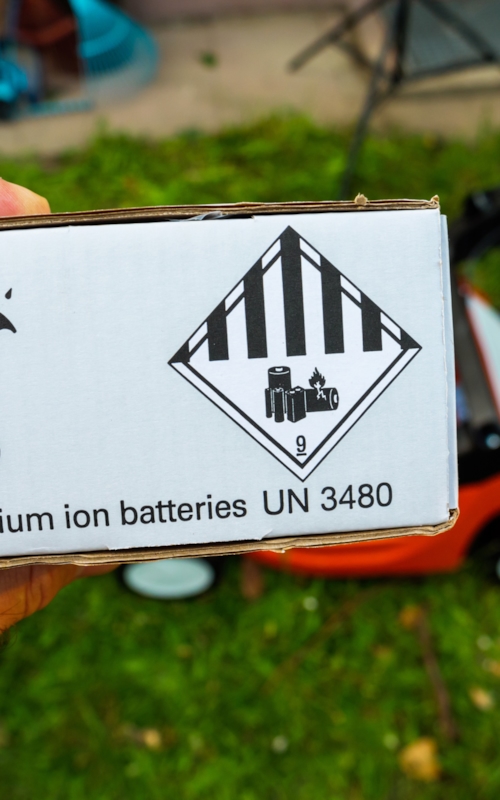
A fire involving lithium-ion batteries is extremely difficult to extinguish. Lithium-ion cells have the property of storing large amounts of energy and producing intense fire behavior when a thermal runaway occurs. Because the fire development of a lithium-ion battery is not comparable to that of fires involving solid materials, liquids, or gases, fire protection in lithium-ion battery storage facilities requires special attention.
Fire protection in lithium-ion battery storage has an inherent vulnerability due to the stored electrical energy within the batteries. This energy can reignite the electrochemical process if the fire protection system does not have sufficient capacity to suppress the fire effectively.
Why K21045 SCP05 Fire Protection of Lithium-Ion Battery Storage?
Kiwa developed the initial type test protocol K21045-SCP05 to demonstrate the effectiveness of fire protection systems in scenarios involving lithium-ion battery storage. This is done within a defined configuration in which fire detection, as well as storage and operational conditions, play a key role.
K21045-SCP05 is a specific certification programme in which a test protocol has been defined. This protocol specifies all starting points and boundary conditions for the storage and/or operational use of lithium-ion cells within a predefined protection concept.
The following aspects are assessed at a minimum:
- The storage compartment;
- The configuration of the fire detection system;
- The configuration of the fire protection system;
- The limitations and/or scope (demarcation) of the solution;
- The required follow-up measures after activation of the fire protection system.
The protection concept and/or configuration is tested to verify that it performs under the specified conditions. If the tests are successful, this protection concept may be applied under certification, provided that the defined principles and boundary conditions are observed.
Within this scope, no fire class has yet been defined for fires involving lithium-ion cells, as the behaviour of these cells can still vary significantly.
For Whom?
With this certification, a fire protection company demonstrates its ability to deliver effective and reliable fire safety solutions for lithium-ion batteries and products in which they are used, such as electric bicycles.
K21045 Fire Protection Systems
The “SCP05 Fire Protection of Lithium-Ion Battery Storage” programme is implemented based on the K21045 Fire Protection Systems Testing, Inspection, and Certification Scheme.
This scheme is internationally applicable for the testing, inspection, and certification of fire protection systems. Through this scheme, Kiwa provides a high level of quality assurance for all common active fire protection systems at every stage of their lifecycle (manufacturing, installation, maintenance, and end-user operation).
It offers a cross-border, universal methodology applicable to all stakeholders involved.
Additional information
Certified companies
Search for certificates by entering a company name or certificate number in the search bar.
K21045 Fire Protection Systems
The K21045 Fire Protection Systems is the assessment scheme for testing, inspection and certification (TIC) of fixed fire protection systems. This scheme therefore focuses primarily on manufacturers, installers and maintenance companies and offers these parties the opportunity to deliver products and services with verifiably a high degree of quality assurance within the wide range of fixed fire protection systems. But end users also have an interest in a conclusive quality chain. The objective of this TIC scheme K21045 is to improve safety and security through uniform application of the relevant international standards relating to fire protection systems.

Why Kiwa Fire Safety & Security?
Kiwa Fire Safety & Security (Kiwa FSS) is an independent and reliable Certification and Inspection body for certifying companies and inspecting installations in the field of fire and burglary protection. A Kiwa certificate gives a justified confidence in the quality of the certified company, product or installations. This can provide a selection advantage for clients and reduce any failure costs.

K21045 Fire Protection Systems
The K21045 Fire Protection Systems Assessment scheme is a scheme for Testing, Inspecting and Certification (TIC) Fire Protection Systems.

K21045 SCP01 Fire extinguishing generators based on the extinguishing medium nitrogen
The specific certification program ‘SCP01 N2 Generators’ focuses on fire suppression generators that use nitrogen as the extinguishing agent, also referred to as nitrogen generators based on a solid condensed compound. SCP01 is conducted under the TIC scheme ‘K21045 Fire Protection Systems’ and outlines the requirements Kiwa applies when issuing a product certificate for N2 fire suppression generators.
K21045 SCP02 Fire Protection Systems for Chemical Storage (Storage of Liquid Fuels) in Buildings
How safe is your chemical storage? Prevent devastating pool fires with certified fire protection systems. Discover Kiwa’s SCP02 testing and certification, the benchmark for extinguishing liquid fuel fires indoors.
K21045 SCP03 – The Certification Programme for Fire Safety in Marine Engine Rooms
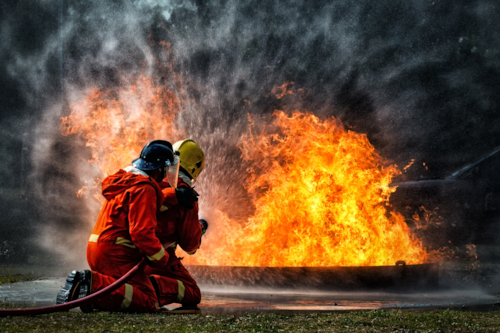
Fires in marine engine rooms pose a significant risk to crew, vessel, and cargo. To ensure safety at sea, ships must comply with strict fire‑protection regulations. Many vessels are equipped with advanced fire‑suppression systems, but their effectiveness must be demonstrated. To support this need, Kiwa has developed the specific certification programme SCP03 – Extinguishing of Large-Scale Fires, Extinguishing of Large Fuel and Operational Fires in Maritime Applications.

K21045 SCP04 Central Equipment for Fire Protection Systems with Solid Compound Generators
Technical developments in fire protection systems are continuously evolving. Increasingly, systems equipped with generators that produce their own extinguishing media are entering the market. These are typically aerosol-based, but nitrogen-based systems are also emerging. To address these innovations, specific quality requirements have been established and formalized in the certification scheme: ‘K21045 - SCP04 Control & Indicating Equipment and Control for Automatic Fire Protection Equipment and Fire Protection Systems Based on Solid Bound Compound (SBC) Generators’.
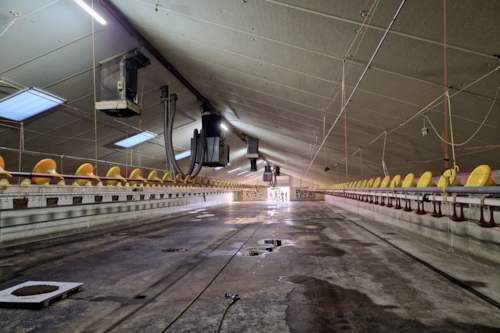
K21045 SCP06 Fire Protection of Livestock in Stables Based on Water Mist Systems
The Specific Certification Programme SCP06 Fire Protection of Livestock in Stables based on Water Mist includes a test protocol designed to demonstrate the effectiveness of a fire protection system based on water mist in stables. SCP06 is implemented in accordance with the test, inspection, and certification scheme K21045 Fire Protection Systems and contains the requirements applied by Kiwa when applying for a product certificate.
K21045 SCP07 Remote access & services on Fire pump systems for sprinklers
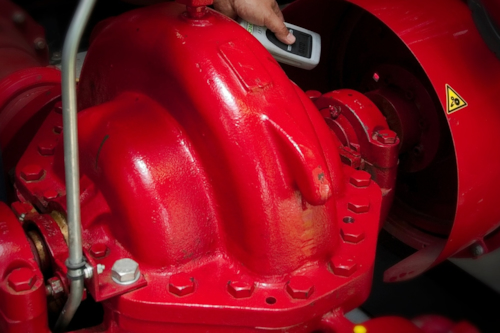
For the execution of the bi-weekly testing of the sprinkler system, a scope has been defined in the Specific Certification Programme ‘SCP07 Remote Access & Services on Fire pump Systems for Sprinklers’, which is carried out under the Test, Inspection & Certification scheme ‘K21045 Fire Protection Systems’.
K21045 SCP08 Certification of Glass Bulb Activators for SBC Fire Suppression
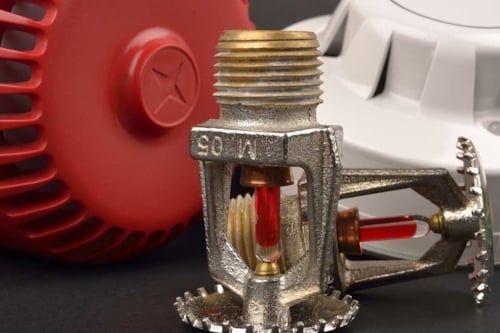
For small-scale fire protection applications, glass bulb activators offer a certified and reliable alternative to conventional fire detection and control systems. The specific certification scheme, ‘K21045 SCP08 Glass Bulb Activators for Solid Bound Compound (SBC) Generators’, defines the requirements for testing and certifying these activators in combination with SBC fire suppression generators. This ensures rapid activation and effective fire suppression when it matters most.

K21045 SCP09 Certification for Residential Water Mist Fire Protection Systems
SCP09 certification provides independent assurance for residential and domestic water mist fire protection systems. The scheme defines requirements for design, installation, commissioning, and maintenance, helping suppliers demonstrate compliance while improving fire safety and occupant protection.
K21045 SCP10 PFAS Cleaning Certification for Fire Protection Systems
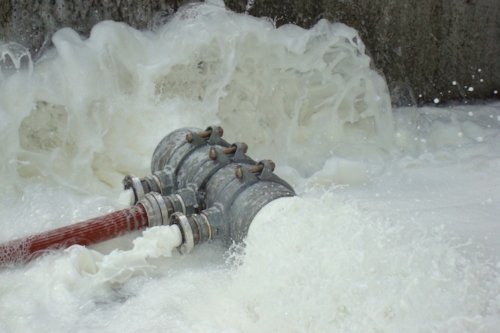
Looking to remove PFAS contamination from firefighting foam systems? K21045-SCP10 provides a structured certification programme for cleaning fire protection systems previously exposed to PFAS-containing firefighting foam. Ensure compliance, reduce environmental risks and support a successful transition to PFAS-free foam concentrates.