
LID and LETID
Why LID and LETID testing matters
In 2021, Kiwa PI Berlin, was contacted regarding underperformance at a >~100 MW solar plant in the MENA region. A review of the site monitoring data, IV curve traces, and O&M records pointed to module-level issues just 18 months after the site became operational.
Kiwa PI Berlin conducted lab-based testing on 20 modules from the site, 16 of which came from the underperforming section of the array, while the other four samples were of the same model type but from a different section. Flash testing revealed that on average the 16 modules underperformed the manufacturer’s guaranteed power by 6.7%. The average power for the four unaffected modules was 7.8% higher than the average power for the 16 affected modules.
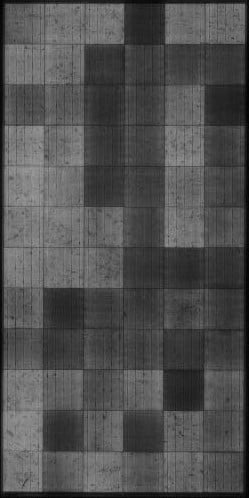
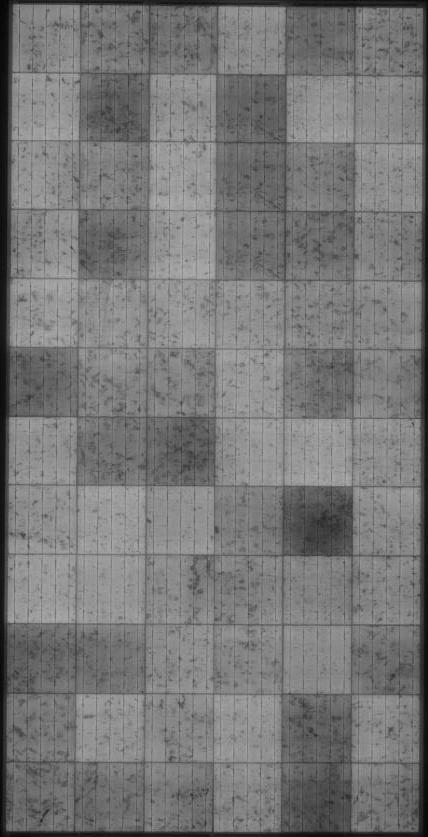
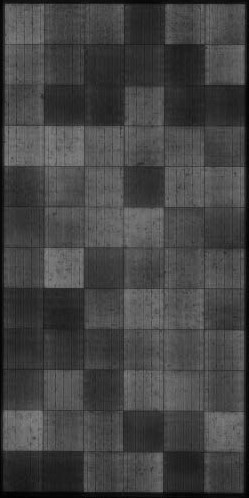
EL images revealed a checkerboarding effect that is common on LETID affected modules. The four unaffected modules did not show this pattern.
Kiwa PI Berlin performed an LETID test on two of the affected samples, which resulted in a minor power decrease, suggesting that the full LETID power loss had already occurred in the field. An LETID recovery test was then performed, which resulted in an average power increase of 6.1%. Improvements in the uniformity of the EL images indicated a significant LETID recovery. These results proved that LETID was a key factor in the underperformance, and that at least two distinct BOMs of the same model type had been delivered to site: one that was LETID susceptible, and another that was not.
Following Kiwa Solar’s Module Procurement Best Practices including PVEL PQP testing, BOM specification in procurement contracts and batch testing would have greatly reduced the likelihood of LETID susceptible modules being shipped to the site.
 |
 |
 |
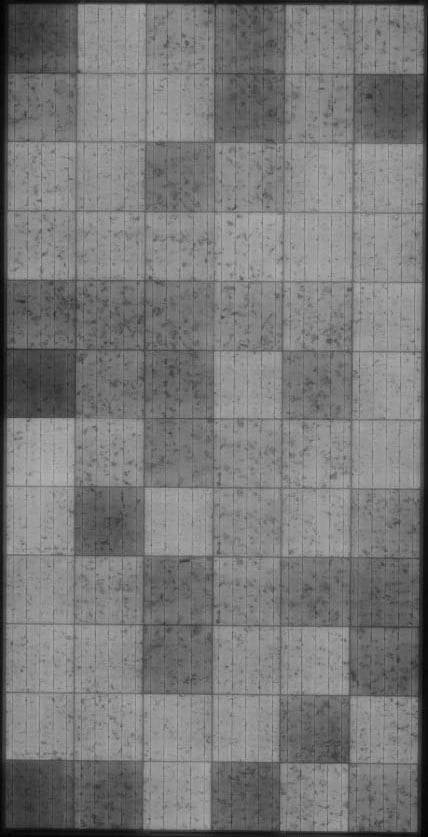 |
EL images from the LETID recovery test. Initial results on the left, post-recovery test on the right. Had there been a different failure mode the LETID recovery test would not have resulted in this change to the EL images.
Materials assessed
|
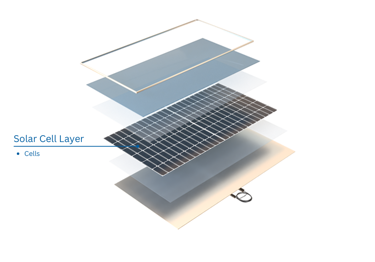
LID and LETID are entirely cell-based phenomena. PVEL’s test results indicate that no other materials impact these degradation modes. |
Test procedure
|
The LETID phenomenon can historically cause degradation rates of 5% or higher in the field in some PERC (and related) cells. Kiwa PVEL’s LETID test follows the guidance of IEC TS 63342:2022, starting with current-induced degradation (CID), rather than LID, in a temperature-controlled environment for 24 hours at Isc and ≤ 30°C. The pre-CID characterizations include IV, EL, LCEL and VI. The post-CID characterizations also include LIC and LCEL. Following CID, the modules are subjected to a dry heat climate chamber set to 75°C, with a current injection equal to twice the Isc minus Imp (i.e. 2 x Isc-Imp) as measured by Kiwa PVEL post-CID. The module is subjected to two rounds of these conditions, each lasting 162 hours. The interim characterizations include IV, EL, WL and VI. The final characterizations also include LIC and LCEL. Historically, light-induced degradation (LID) and has been shown to degrade module power output by several percentage points, depending on the specifics of the technology and the field conditions. However, in recent years with the increased use of n-type and gallium-doped p-type cells, the amount of LID has reduced significantly. To quantify the amount of LID, 10 samples are submitted to ≥ 40 kWh/m2 of light soaking, which Kiwa PVEL has found to be sufficient to reach stabilization in a single dose on the vast majority (>95%) of modules tested since 2021. 10 samples are measured for this test to provide statistically relevant results representing the specific BOM being tested. One control module is characterized simultaneously with these LID test modules. If the average power degradation of these 10 samples exceeds 1% following the ≥ 40 kWh/m2 of light soaking, Kiwa PVEL will expose all samples to a single additional round of ≥ 20 kWh/m2 of light soaking. In order to keep PQP sample requirements minimized, when LID is required for a BOM as per Appendix B (Kiwa PVEL PQP: BOM Test Requirements) the LID samples will be reused for other PQP tests including MSS, PID, UVID, PAN, and/or IAM. For additional PQP tests, or if the BOM does not require LID, modules will also undergo a single round of ≥ 40 kWh/m2 light soaking or CID for 24 hours at Isc. This pre-conditioning ensures a level of stabilization sufficient to perform the subsequent tests. The chosen method of pre-conditioning (i.e. light soaking or CID) will be at Kiwa PVEL’s discretion. Note that the samples destined for SML-TTF, Hail-TTF, BDS and FE receive no pre-conditioning (neither light soaking nor CID). For modules under-going LID, light soaking conditions will follow the guidance of IEC 61215-2:2016 MQT 19, with modules kept near its Mpp and only irradiance levels above 500 W/m2 will be counted towards the total irradiance dose. The pre- and post-LID, light soaking or CID characterizations include IV, EL, WL and VI, while the post-LID characterizations also include LIC and LCEL. |
 |